The search landscape has changed forever. Millions of people now get answers directly from AI — without ever clicking a link. ChatGPT, Perplexity, and Google’s AI Overviews do not just surface websites; they cite authoritative sources, mention brands by name, and shape buyer perception before a human ever enters your funnel.
If your brand is not being cited, you are invisible to a fast-growing segment of your audience — and your competitors who are cited are getting that attention instead.
This guide breaks down exactly how AI citation works, what it takes to get your brand mentioned, and how Visibility.so helps you monitor, measure, and grow your brand presence in AI-generated responses.
Why AI Citations Matter More Than You Think
Traditional SEO gets you ranked. AI citations get you recommended.
When someone asks ChatGPT “What is the best tool for managing remote teams?” or Perplexity “Which CRM is best for SaaS startups?”, the AI does not return a list of links — it gives a direct answer, often naming specific brands it considers authoritative. That mention is worth more than a page-one ranking because:
- It shapes purchase intent: people trust AI answers as curated recommendations
- It happens at decision time: AI queries often signal high buyer intent
- It is brand-building at scale: millions of queries happen daily across ChatGPT, Perplexity, Gemini, and Google AI Overviews
The brands that appear in these answers did not get there by accident. They followed a consistent set of content, authority, and technical signals that AI models use to identify trustworthy sources.
How AI Models Decide What to Cite
Before you can optimize for AI citations, you need to understand how these systems work.
Large Language Models (LLMs) like ChatGPT are trained on massive datasets scraped from the web. The brands, concepts, and claims that appear repeatedly in high-quality sources — Wikipedia, reputable blogs, industry publications, press coverage — get baked into the model’s understanding of the world. When a user asks a question, the model surfaces what it “knows” from training, often attributing it to the sources it encountered most frequently.
Retrieval-Augmented Generation (RAG) systems like Perplexity work differently. They perform a live web search, retrieve current pages, and synthesize answers with citations. Here, recency and source quality matter enormously — Perplexity cites the pages it retrieves, so ranking in search engines still helps, but the content must also be dense with directly answerable information.
Google AI Overviews blend both approaches. Google leverages its existing index but selects content that best matches the format AI Overviews prefer: clear structure, direct answers, and authoritative sourcing.
Each system has different inputs, but they share a common thread: they favor brands that have built genuine authority through consistent, high-quality content.
7 Strategies to Get Your Brand Cited by AI
1. Own Your Topic with Deep, Authoritative Content
AI models are trained to recognize expertise. Surface-level blog posts will not cut it. You need content that goes deep — the kind of resource that other publications cite, link to, and reference.
What to do:
- Publish comprehensive guides (2,000+ words) that cover a topic end-to-end
- Create original research, surveys, or data studies that others will cite
- Build definitive resources — glossaries, frameworks, benchmarks — that establish your brand as the reference point in your niche
- Update content regularly to signal freshness and continued authority
2. Get Featured in High-Authority Publications
LLMs heavily weight content from authoritative domains. If TechCrunch, Forbes, Harvard Business Review, or industry-leading trade publications mention your brand, that signal gets amplified significantly in training data.
What to do:
- Run a proactive PR strategy targeting top-tier publications in your space
- Pitch data-driven stories, not press releases — journalists want angles, not ads
- Get your founders and executives quoted as expert sources in relevant articles
- Build relationships with journalists who cover your category
3. Build a Strong Wikipedia Presence (Where Warranted)
Wikipedia is one of the most-cited sources in LLM training data. If your brand is notable enough to warrant a Wikipedia page, having one — and keeping it accurate — can significantly boost your presence in AI-generated answers.
What to do:
- Determine if your company meets Wikipedia notability guidelines (significant third-party coverage helps)
- If eligible, create or improve your Wikipedia entry with neutral, well-sourced content
- Ensure your entry links to credible external references
- Monitor it regularly for accuracy
4. Structure Your Content for Direct Answers
Perplexity and Google AI Overviews retrieve and summarize live content. To get cited, your pages need to be structured so that AI can extract clear, direct answers from them.
What to do:
- Use clear H2/H3 headings that match how people phrase questions
- Add FAQ sections with concise, well-formed answers
- Use structured data (schema markup) for FAQs, how-tos, and product information
- Write the first sentence of each section as a standalone, quotable answer
- Keep paragraphs short and scannable
5. Dominate Reddit, Quora, and Community Platforms
AI systems — especially Perplexity — actively pull from forums and community platforms where real people discuss real problems. Reddit threads, Quora answers, and niche community forums are surprisingly well-represented in AI citations.
What to do:
- Have team members (or brand advocates) participate authentically in relevant subreddits and communities
- Answer product-related questions with thorough, helpful responses — not promotional ones
- Encourage satisfied customers to mention your brand in relevant discussions
- Monitor brand mentions and respond helpfully where appropriate
6. Leverage Brand Mentions Across the Web
AI models interpret unlinked brand mentions as signals of brand awareness and authority — much like traditional SEO interprets links. The more your brand name appears in credible contexts (reviews, comparisons, roundups, case studies), the more likely it becomes embedded in model training data.
What to do:
- Pursue review placements on G2, Capterra, Trustpilot, and category-specific review sites
- Get listed in “best of” roundups and comparison articles
- Encourage customer case studies to be published on external sites
- Seek podcast appearances, webinar mentions, and video content where your brand is named
7. Build Topical Authority Clusters
AI models understand topics contextually. Being known for one article is not enough — you need to signal that your brand owns a domain of knowledge through a consistent cluster of related content.
What to do:
- Map out the full topic universe around your core product or service
- Create pillar pages and supporting content clusters that interlink
- Publish consistently on adjacent topics that your target audience cares about
- Establish a point of view — AI systems favor brands with clear, consistent perspectives
The Problem: How Do You Know If It Is Working?
Here is the challenge most marketing teams face: AI citation is nearly impossible to track with traditional analytics.
When someone gets your brand recommended in ChatGPT and then visits your site, that traffic appears as “direct” in Google Analytics. When Perplexity cites you, the referral attribution is murky. When Google AI Overviews feature your content, impressions in Search Console do not tell the full story.
You are investing in content, PR, and brand-building — but you have no clear signal on whether AI systems are actually picking up your brand.
Until now.
How Visibility.so Tracks Your AI Brand Presence
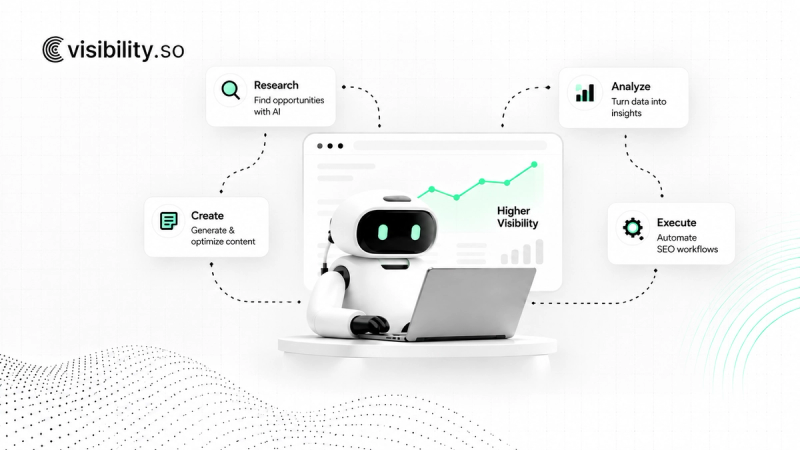
Visibility.so is purpose-built to solve this exact problem. It is the only platform that gives marketing teams full visibility into how their brand appears — or does not appear — in AI-generated responses.
- Monitor AI Citations Automatically: Visibility.so continuously queries ChatGPT, Perplexity, Google AI Overviews, and other AI systems with the questions your target audience is actually asking.
- Competitive Intelligence for the AI Era: Visibility.so shows you exactly which brands are being cited for your most important queries — and what they are doing to earn those citations.
- AI-Ready Content Recommendations: Based on your citation data, Visibility.so surfaces actionable content opportunities — the specific topics, formats, and structures that are most likely to earn AI citations in your category.
- Track the Metrics That Actually Matter: Visibility.so connects AI citation trends to the business outcomes you care about: brand awareness, share of voice, and ultimately pipeline.
Getting Started: Your AI Citation Roadmap
Getting cited by AI is not a one-time project — it is an ongoing discipline. Here is a practical 90-day roadmap to build your foundation:
- Days 1 to 30: Audit and Baseline
- Run your most important queries in ChatGPT, Perplexity, and Google AI Overviews manually — who is being cited?
- Set up Visibility.so to automate this monitoring at scale
- Identify the 10 to 15 queries most critical for your brand discovery
- Days 31 to 60: Content and Authority Building
- Publish at least 3 to 5 comprehensive, authoritative pieces targeting your highest-priority queries
- Launch a PR push to get mentioned in at least 2 to 3 high-authority publications
- Audit your existing content for AI-readability and restructure where needed
- Days 61 to 90: Amplify and Measure
- Track citation changes in Visibility.so — what moved?
- Double down on content types and topics driving citation gains
- Identify new query opportunities based on emerging citation data
- Share results with leadership to build buy-in for continued investment
The Brands That Win in the AI Era
The shift to AI-powered discovery is happening faster than most marketing teams realize. The brands that invest now — in authority, in content quality, in community presence — are the ones that will be cited when your future customers ask an AI who to trust.
This is not about gaming an algorithm. It is about building the kind of brand that AI systems recognize as worth recommending — because humans already do.
Visibility.so gives you the data to know where you stand, the intelligence to know what to fix, and the measurement framework to prove it is working.
Explore how Visibility can power your brand journey at visibility.so